
A personal story about Gucci, Zhang Linghe, and the women luxury brands leave outside the frame.
Luxury Brand Imagery vs. Consumer Realities: Fast Facts
- The Strategic Paradox: While global luxury brand campaigns rely on the popular C-drama actors as brand ambassadors, the high-spending audience actively spending is overwhelmingly mature.
- The Gen X Capital Locomotive: Global consumer spending metrics for the Gen X cohort stands at $15.2 trillion, solidifying this demographic and expected to continue to do so until 2033.
- Personal Pleasure vs. Social Status: International affluent consumer data reveals that over 50% of buyers aged 45–65 purchase luxury for the personal pleasure rather than societal validation.
- The Imagery Disconnect: High-fashion houses run the structural risk of losing hard-core brand-love capital when marketing visuals fail to represent the actual independent, career-driven demographics holding the purchasing power.
Luxury Brand Marketing and Niche Demographics: Quick Answers
Why is there a demographic blind spot in modern luxury brand marketing?
Luxury brand marketing centers campaign imagery around young faces while ignoring the mature consumer base that anchors core revenue. When brands rely primarily on youthful talent or unreachable iconic figures, they create nostalgia rather than true personal resonance for affluent buyers.
What is the connection between high fashion luxury brands and C-drama actors?
High-fashion houses leverage popular C-drama ambassadors to drive digital engagement, creating visual distance for affluent, independent female consumers. Top luxury labels routinely sign prominent C-drama stars such as Song Weilong, Wang Yibo, Zhang Linghe, and Tian Xiwei to capture massive fan bases, though this styling often feels unachievable for mature buyers.
What are the spending metrics for Gen X and mature consumers in the global luxury market?
Gen X consumer spending power reaches $15.2 trillion globally, projecting them as the leading market engine through 2033. Industry data indicates this mature cohort maintains a dominant financial footprint that dwarfs younger demographic segments in total purchasing capacity.
Why do mature, affluent consumers buy luxury products?
Affluent consumers aged 45 to 65 purchase high-end products for internal personal pleasure rather than external societal validation. Survey findings confirm that over half of these mature buyers prioritize authentic craft value and personal enjoyment over social status recognition.
How can luxury houses better align their brand imagery with C-drama demographics?
Luxury brands can optimize market positioning by featuring the authentic, mature women who actively support global C-drama ambassadors. Moving past youth-exclusive typecasting enables institutions to bridge the gap between online fan hype and in-store sales, converting intellectual appreciation into direct transactions.
The Deep Dive Article
If I were Gucci, I’d put me on the cover next to Zhang Linghe. Not because I’m special. Because I’m the woman his fans actually are. I love Gucci, I honestly am a huge fan but… I choose to buy Chanel instead.
A few words on who I am: 45, European, with good career options and my own family of 3. To add to this, I am a C-drama lover to the point that I decided to utilize my strong marketing and management experience to start the current C.MAG. In fact, one of the first pieces I wrote a few months ago is about him and I often use him as my case study to learn the C-drama world. But moving on, let me talk about a love story for a bit.
My Gucci “Brand-Love Story”
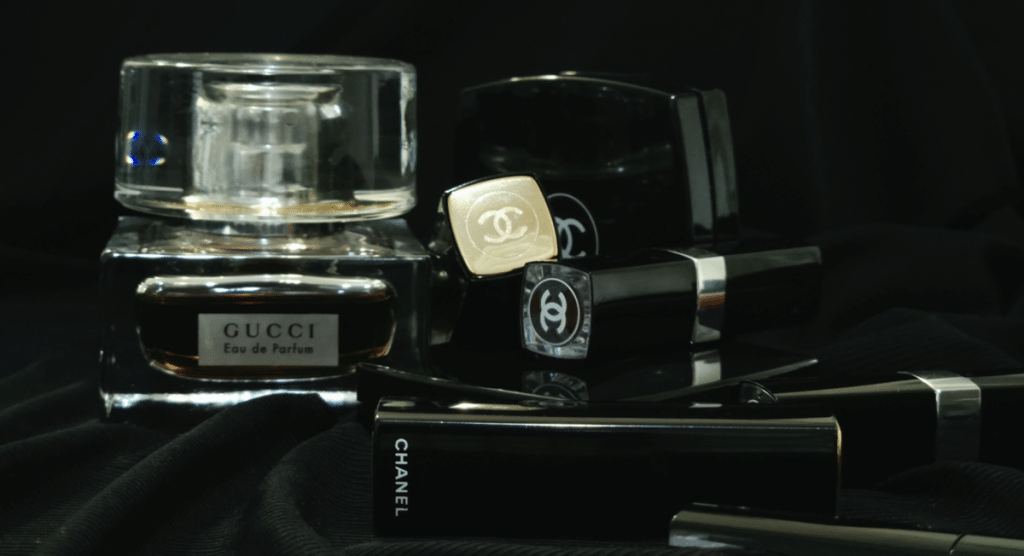
I have my own Gucci brand “love” story which is indeed vintage in a way. The first touch I had with the brand was when a client of the company I worked for gave me a gift for selling him 7 properties online without him seeing those in person. Long story short, a year of communication, 7 properties later and a first trip to oversee them, I ended up with an unexpected gift. I was staring at a luxury, polished brown box, small gold letters saying “Gucci” in one corner and the desire to swipe your fingers over the surface but being too scared to do it, so you don’t leave a fingerprint on it. It was, in fact it still is, the Gucci Eau de Parfum Luxury Gift Set… And yes, exactly this one “the Tom Ford legacy from 2002-2005”.
The feeling when you crash-land on “premium” for the first time is very specific, like falling in love again and again. The initial sniff of that perfume, honestly, I still get it every single time I open that bottle even today.
This is when I actually became a huge fan of the brand. I have to emphasize how hard it was to get something like this in Bulgaria back then. First, brand access was limited and second, an excellent salary was about 200 – 250 Euros monthly (current currency) and not many people managed to get it. So if you wanted to buy luxury brand stuff, you actually had to work hard to get those in terms of access and price. That by itself somehow increased the charm and value of it all tenfold.
20 years forward, I can actually buy any Gucci perfume or Gucci Beauty item I want.
Well… I don’t…and let me break down why below with a couple of paragraphs, so you could understand me better.
Why Zhang Linghe Again?
The answer is obvious: BoF included him in its “Models and Muses” category, premium brands ambassador, your feed is probably flooded with his “iconic walk”. This is the easiest case to analyze right now as all stars align clearly once you follow the trail from industry to industry with the natural evolution of one particular public figure. Facts and figures easily fall into place when you have a constant to connect the dots in the big picture. As a meeting point between C-drama and the luxury segment, he is impossible to ignore and for me it is very easy to make the point I want to.
Initially, I added Gucci and luxury brands research as a variation in my article series because there was one question that kept popping up in my head: If Gucci partners with Zhang Linghe, who sits in the empty space next to him that actually does the work?
Enter…the invisible major player on the ground… Millennials and Gen X women with money to spend not only abroad but on the domestic Chinese market, too. And honestly I think that particular audience is there for the embrace if only they get the invitation.
Zhang Linghe’s audience is predominantly female. My own research, rankings and search data show a similar trend with one emerging market for C-drama in general, that has more potential besides the US and Europe, which is India (personal observations with early statistical data only). The readership and engaged audience that I see is in its majority women spanning US, Europe and the broader APAC.
If we dig further, Gen X is now in its mid-40s to early 60s and NIQ and World Data Lab estimate its consumer spending at $15.2 trillion in 2025 with a projection for this to remain the leading spending cohort until 2033. Those financial figures make the invisibility of real-life Gen X women in luxury starker, especially when we consider another fact that is beneficial to brands. They seem to also be more personally involved when buying rather than because they have something to prove. I dug out a 2025 survey by Publicis Luxe and OpinionWay of 1,150 affluent consumers aged 45-65 across France, the US, the UAE, and China. More than half of the respondents in the US, the UAE, and France said they bought luxury for personal pleasure rather than social recognition. The way I see it, the big question is not whether women like me can afford to participate in luxury, but why the imagery rarely resonates with us enough to see ourselves in it.
My point is…
My personal observation is that the mature woman has been the one spending for ages. We were spending when we were 20 with limited resources back then and we are spending now as we grew up as strong, independent women with careers and families. Along with that we do have the capability to actually spend. At the same time all I see as the soft power placed next to the brand ambassadors (read C-drama actors) are polished young faces. Don’t get me wrong, I love the young, fresh faces I see around me every single day. That’s not the point. The thing is if Millennials and Gen X are a valued piece of the puzzle, why don’t we see those “invisible” women on the covers of magazines more often? When I am saying this I don’t need the super iconic faces of my own past that are unreachable and bring only some nostalgia back. Nostalgia for old days doesn’t make me spend my money. It just makes me feel…well nothing really.
Reading countless comments that call actors “boyfriend” or post side-by-side height comparisons with them over the last year actually gave me a good understanding of what women watching C-drama envision. To me, it shows they want to be placed in the frame.
A single cover with a “me” in the spotlight: a blond, tall nobody with face weathered from paragliding all summer, confidently wearing her smile wrinkles and no experience at all right next to the complete opposite – luxury brand ambassador tall, polished and refined, a person I support because I chose to.
Instead… Gucci taught me what luxury felt like. Chanel Beauty is where my money goes and the magazine cover explains how I feel about the distance between those two.