
If you have been following The G. Blog, you know I haven’t planned to be on the passive side, but rather the opposite. I always love to dig more, read more, and try to reveal more. Whether it is the difference in the production model in Chinese television or the dubbing culture, my approach is to unpack below the surface and leave the most obvious answers to others. I love to understand how Eastern storytelling functions, and over time my understanding continues to deepen. That is why I have accepted that my blog is a living, breathing space that evolves over time.
Today, I am taking a step toward expanding the conversation into something I never thought I’d do before. I am adding a dedicated editorial category to my blog, completely different from my other pieces: Critical C-Drama Reviews.
Why a Dedicated Review Section?
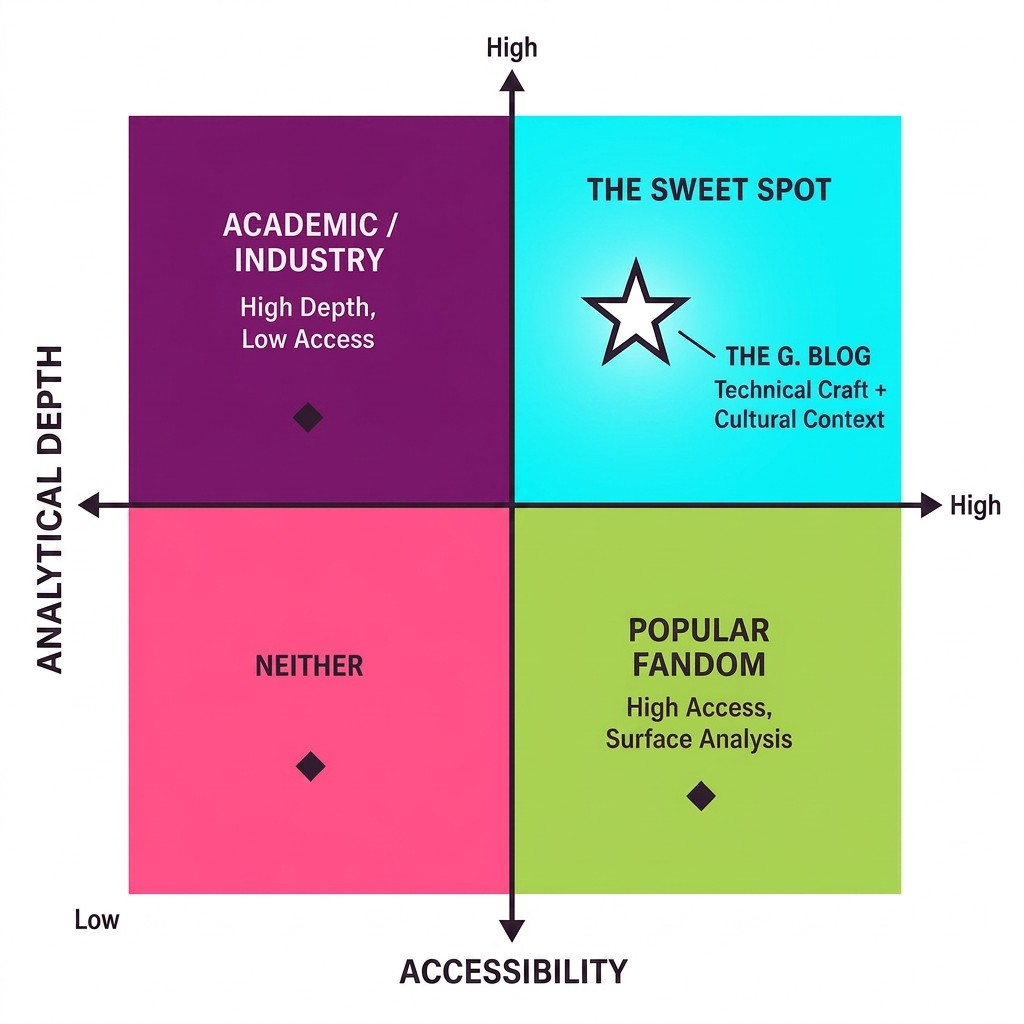
The English-language coverage surrounding Chinese television is very broad, but it remains largely polarized. On one hand, there are endless social media hot takes, short videos repeating similar information, and a flood of internet content that keeps repeating more of the same. You’ll find episode summaries, star-rating aggregators, and a lot of content driven purely by celebrity fan culture. On the other side, you find academic papers that dissect industry metrics without engaging with the sheer entertainment value of the screencraft itself.
For me, and I know you may think differently, there is a clear gap for comprehensive, technical, and culturally grounded media criticism. I imagine C-drama reviews developed with the same analytical depth applied to cinema productions. It will bring additional value to those who are just now discovering C-drama genres and give the English-speaking audience insight into how to read into culture, production quality, and execution.
My Review Doctrine & Weighted Rubric
To make sure that every review on my blog is fair, transparent, and immune to internet hype, all critiques will operate under a published Editorial Manifesto.
The criteria are clear and set in advance, aiming to judge production value, narrative logic, and performance craft against the peak potential of a show’s specific genre.
Every long-form review will use a 5-Pillar Weighted Rubric:
- Narrative Architecture & Dramaturgy (30%): Script logic, character agency, pacing, and adaptation mechanics.
- Visual Craft & Aesthetics (20%): Cinematography, lighting, set geometry, color grading, and CGI/practical integration.
- Performance & Character Depth (20%): Vocal craft, emotional range, line delivery, and ensemble chemistry.
- Cultural Context & Localization (15%): Historical fidelity, subtext, idiomatic accuracy (chengyu), and translation fidelity.
- Sonic Landscape & Score (15%): Integration of OST leitmotifs, sound design, and acoustic atmosphere.
Final scores will be categorized using a strict Tier Classification System (S-Tier through D-Tier) to combat the score inflation common on popular review hubs.
What You Can Expect
My main rule remains: watch it first, evaluate later. Shortly, you will see my Manifesto published, and further along you will have access to free, structured, long-form reviews published alongside my ongoing industry reports and cultural essays.
Each review will offer a clear thesis, a detailed technical analysis within my capabilities, and an explicit breakdown of where a drama succeeds or fails as a visual work. The reviews will not come fast and furious. On the contrary, as a single author getting the work done all alone, it might take me some time.
The first long-form review under this new framework drops next week. Welcome to the next chapter of The G. Blog.
P.S. If you want to contribute or you’d like to send me feedback, give me a shoutout via my LinkedIn profile: Gergana Toleva.